

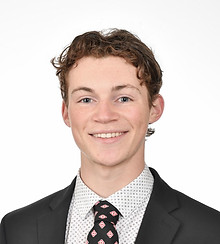
About Me
I am a senior Sport and Entertainment Management major at the University of South Carolina graduating in August, 2026. Building on the foundation of knowledge I gained at USC, I have developed a skill set that spans organizational strategy and operational execution. Working for three summers with the New York Yankees, I coordinated large-scale environments and maintained operational continuity during high-attendance events. In a role where I constantly turned plans into action, I developed the qualities of precision, preparation, and urgency. After leaving the Yankees, I brought these skills to the Ridgefield Cultural District, where I was tasked with designing the strategic framework of the new organization. In this role, I not only defined the long-term vision and strategic direction, governance structure, and brand, marketing, and development strategy, but also managed operations to implement these in the real world, leading to the achievement of the goals I helped create. In my next opportunity, I hope to utilize my skills to help businesses and organizations solve complex cross-functional problems end-to-end, from strategy development to implementation.
The portfolio is organized around the experiences that have most influenced my academic, professional, and personal development, illustrating how my education has shaped the way I approach complex problems and organizational leadership.
Three Key Insights
Key Insight #1: Effective Strategy Begins by Defining the True Problem
One of the most important lessons I learned through the Ridgefield Cultural District was that developing a successful strategy requires understanding the problem being faced. Before proposing any solutions, it is necessary to understand not only the direct and explicit demands necessary for an answer, but also the implicit questions that go unasked. For example, when the question “How can we market the Cultural District?” was posed to me when I first started my internship, it would have been possible to give answers that would satisfy the explicit question: social media, radio spots, and billboards are all ways to market. With further refinement, I could probably even come up with ideas that more closely align with our target audience: event sponsorships, collaboration with cultural institutions, etc. But these wouldn’t have solved what was implicitly being asked but was masked by words: “How can we create something that people care about?” The original question confused exterior awareness for interior meaning. Or, hoped that exterior awareness could create interior meaning. Understanding this, my scope widened. After developing an incentive structure and outlining shared goals that benefited all stakeholders of the Cultural District, developing natural and unique marketing solutions became easier and had more depth.
My coursework in Sport and Entertainment Management, especially Prof. Koesters Sales in Sport and Entertainment, introduced me to the abstract distinction between vision, strategy, tactics, and execution that was the intellectual framework necessary for this project, but this internship allowed me to reckon with the distinctions in practice. Developing the District's governance structure, branding, communications strategy, and public art initiatives all became easier once I defined the organization's mission and long-term objectives. That shift fundamentally changed the way I approach organizational decision-making and will continue to guide how I solve problems throughout my career.
Key Insight #2: Strong Organizations Are Built Through Common Purpose
Working with the Cultural District, I learned that organizations can succeed by creating systems that allow stakeholders to work toward their own incentives through a common goal. The goal the Cultural District was set up to achieve was to utilize Ridgefield’s cultural assets to strengthen the town economically, civically, and experientially. Because the stakeholders of the Cultural District- residents, cultural institutions, and the municipal government- all have different objectives, and because the commitment of all three is necessary for the District to function properly, it became one of my responsibilities to create governance structures and partnership models that aligned these groups. What we came up with was a system that prioritized community connection through cultural assets. Residents and tourists benefited experientially from placemaking, public art, and an increased knowledge of the town and its assets, which would boost visitation; cultural institutions would benefit economically from increased visitation by tourists and residents; and the government would benefit civically by supporting public life in its town.
This understanding was reinforced through Professional Development with Oak View Group, where OVG executives introduced our class to the Arena Alliance and its philosophy of "Buy Together, Think Together, Sell Together." Studying how the Alliance aligned the incentives of independently operated venues changed how I thought about organizational leadership. Throughout the Cultural District project, that principle became the foundation for decisions ranging from governance to public art initiatives and collaborative marketing. I came to understand that leadership is not simply directing people toward a goal but designing systems in which collaboration creates greater value than individual effort alone.
Key Insight #3: Communication Shapes How People Experience Organizations
Before working with the Cultural District, I viewed branding and social media primarily as tools for implementing marketing tactics, but my perspective changed as I began developing our communications strategy. At first whe researching successful Cultural Districts' social media pages, I found much of their marketing to be unintuitive. There was rarely any informative content promoting district events or initiatives. I had expected the content to be information-centered. Instead, I found that the strongest accounts often appealed to emotion and decentered information. In any given video, the focal point is the community: a family sitting in a park, a group murmuring in a theater foyer, a vendor handing a child popcorn. These are dynamic and sensory-oriented, creating an atmosphere that static informational graphics could not.
Shortly after this realization, I had another: these videos were not simply meant to advertise events and initiatives, but to shape how viewers understood and experienced the place itself. By refining the way the District presented itself online, we could influence how people perceived Ridgefield before they ever arrived. This insight became especially valuable once we connected it to our broader goal of presenting Ridgefield as a unified cultural destination rather than a collection of individual attractions. By emphasizing the identity of the community instead of isolated events or institutions, we sought to cultivate greater community pride while encouraging visitors and residents to experience the town as something larger than the sum of its parts.
Instructor Hart first introduced me to the distinction between informational and emotional marketing in Sport and Entertainment Marketing. He explained that while both have value, each is constrained by the strengths and limitations of its medium. This internship demonstrated that principle in practice. I came to understand that social media is most effective not as a platform for delivering information, but as a medium for creating emotional experiences that reinforce an organization's identity and advance its broader strategic goals.
Leadership
Many communities possess valuable cultural assets such as museums, theaters, parks, galleries, local businesses, and artists that draw visitors into town, but they often struggle to maximize their impact because these organizations operate independently. Although each institution may fulfill its own mission, the community often lacks a unifying identity that encourages residents and visitors to experience these assets together as part of a larger whole. As a result, opportunities for economic development, civic engagement, and community engagement are diminished. If given the opportunity to help establish or revitalize another town’s cultural positioning, I would apply the lessons learned through my experience developing the Ridgefield Cultural District to create an organization capable of connecting these stakeholders around a common purpose.
Recommendations
The first step would be to derive the actual problem the organization is trying to solve. Rather than assuming an objective, I would take an inventory of the town's cultural assets and meet with and interview stakeholders to discuss what they would like to achieve. Synthesizing the contents of these conversations, I would use my new context to discern the most visible and tactical problems from their strategy. Then, I would assess the alignment of the strategy with stakeholders' objectives.
Once the organization's purpose is clearly established, I would work to design governance structures and partnerships that align the interests of the stakeholders. Residents, cultural institutions, businesses, artists, and municipal leadership may characterize success by different metrics, but the functions that produce success could be symbiotic. Instead of asking organizations to collaborate simply because they’re part of the same community, I would create an interlinking incentive structure in which each stakeholder benefits from the success of the others. My experience with the Ridgefield Cultural District demonstrated that sustainable collaboration that encourages continuous participation through common purpose has a great effect on advancing stakeholders' goals and objectives.
Finally, I would develop a communications strategy aimed at positioning the organization's identity rather than simply promoting individual events. Through branding and social media, I would use aesthetic framing of everyday touchpoints to orient the viewer to perceive the beneficiary in the way we want them to. By emphasizing authentic stories, everyday experiences, and the people who shape the community, communication can strengthen community pride and visitor engagement.
Implementation
The project would begin with a discovery phase to understand the community. During this stage, I would conduct stakeholder interviews, research comparable organizations, inventory existing cultural assets, and identify shared opportunities and challenges. These findings would be synthesized into a strategic framework defining the organization's mission, long-term vision, and priorities.
The second phase would focus on organizational development and execution. I would establish a governance suited to the needs of the organization and incentive structures that would tightly link the success of all partners. Then, with a clear foundation of values, mission, and priorities and a structure that necessitates accountability, we would be able to implement our strategic goals through tactic. Depending on the scope of the organization, collaborative projects such as public art installations, community programming, and placemaking initiatives can promote the organization’s and stakeholders' goals. Throughout implementation, I would meet with stakeholders to evaluate progress and adjust plans as necessary.
Evaluation
Success would be measured using both quantitative and qualitative data. Quantitative measures would be used to determine the efficiency of our tactics and would include social media engagement, event attendance, and MoM or YoY visitation increases to member institutions. Qualitative feedback would focus more on how effectively the organization is aligning with stakeholder values, expectations, and desires. While municipal and institutional leadership would fall here, the bulk of this research would analyze resident and visitor feedback, as all initiatives would be public-facing and aimed at promoting the community.
I would have to evaluate more than just outcomes, though. Every few months, I would need to reassess whether our tactics are still aligned with our stated goals and whether those goals align with our long-term mission. Further, I would make sure that the organization’s governance structures continue to encourage collaboration. The most important lesson I learned through the Ridgefield Cultural District is that lasting organizational change depends upon aligning strategy, governance, communication, and execution around a common purpose.